Forget the popular advice that ABM means personalizing harder. Swapping a company logo into an ad, naming a prospect in a subject line, or building a glossy microsite proves effort, but it doesn’t create a buying conversation. Strong examples of account based marketing start with a defined job for the campaign. They identify which accounts matter, decide what signal shows interest is real, give the buying group a relevant next step, and make sure sales can act before that moment cools.
That’s the standard behind the eight motions below. You’ll find tiered programs, live conversation, intent triggers, executive events, personalized video, direct mail, website personalization, and LinkedIn targeting. Each one is a reusable model, not a trophy case. Pay attention to how targeting, channel, personalization, and follow-up fit together.
The commercial logic has been consistent for years. ITSMA helped formalize ABM in the early 2000s as an account-level alternative to broad lead generation, and in a 2017 ITSMA and ABM Leadership Alliance survey, 87% of B2B marketers said ABM delivered better ROI than their other initiatives, according to a review of real B2B account-based campaigns. Judge these examples the same way, by account engagement, opportunity progression, and revenue, not by form fills or applause for clever creative.
Table of Contents
- 1. Tiered ABM Program (One-to-One, One-to-Few, One-to-Many)
- 2. Conversational ABM and ABX (Account-Based Experience) with Drift
- 3. Intent-Triggered ABM Campaigns
- 4. Executive Dinner and Roundtable ABM Events
- 5. Personalized Video Outreach for Target Accounts
- 6. Multi-Channel Direct Mail and Gifting ABM
- 7. Website Personalization for Named Accounts
- 8. LinkedIn Account-Targeted Ads for ABM
- 8 Account-Based Marketing Examples Comparison Guide
- Turn the Examples Into an ABM Operating System
1. Tiered ABM Program (One-to-One, One-to-Few, One-to-Many)
Tiering solves the mistake that kills many programs before they start. Teams name hundreds of accounts, then realize they can’t personalize everywhere for all of them. A tiered model sorts accounts by revenue potential, strategic fit, and buying complexity, then matches effort to value. The framework, popularized by SiriusDecisions, now part of Forrester, remains the cleanest way for a small team to spend where deals are largest.
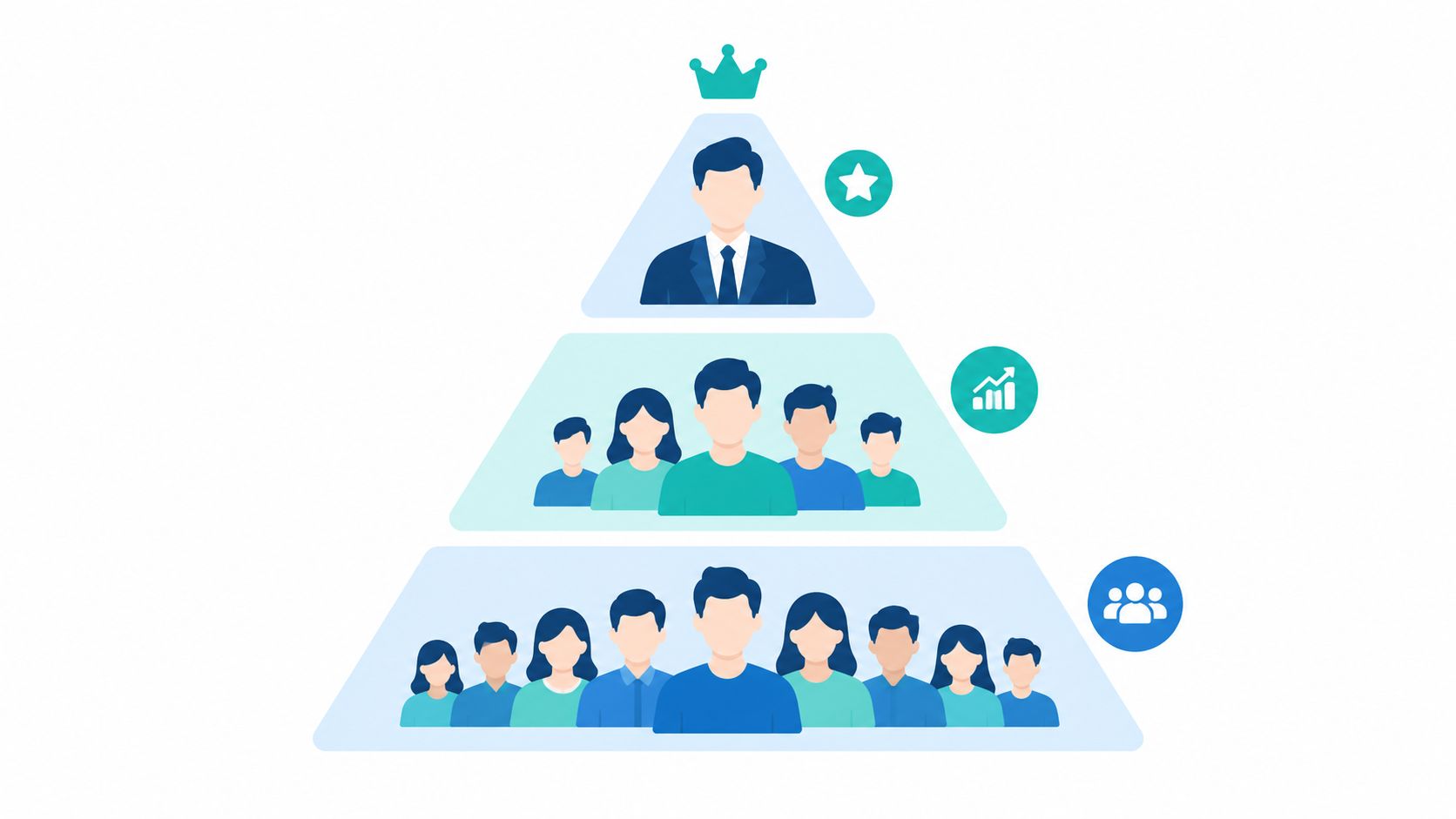
A practical split looks like this. A software company puts 20 named enterprise accounts in Tier 1 with an executive sponsor, custom research, and personalized video. It places 150 mid-market accounts in Tier 2, grouped by vertical and shared use case. Its broader target list sits in Tier 3, where programmatic ads and lightly personalized content keep the brand present.
Where the model earns its keep
A cloud-services provider used a one-to-few version across 50 enterprise manufacturing accounts, building content hubs around each segment’s business objectives and coordinating sales and marketing outreach. The program reached a 70% engagement rate and a **190% increase in successful contacts**, while creating 18 actionable opportunities across six accounts in one month, valued at $1.3 million, with a reported 10x marketing return.
- Define the account first: Get clear on what an ICP is and how fit should be scored before assigning tiers.
- Review tiers quarterly: Promote accounts showing intent, and demote accounts that stop fitting.
- Write down tier entitlements: Sales and marketing should know exactly what Tier 1 receives that Tier 3 doesn’t.
- Route by tier on the site: Captiwate’s traffic segmenting and ABM tiering can send high-intent Tier 1 visitors to live video while Tier 3 visitors start with AI chat.
Don’t give every account one-to-one treatment just because ABM is fashionable. Recent benchmark reporting found 71.2% of surveyed organizations using ABM and a self-reported average ROI of 137%, figures described in the 2024 account-based marketing benchmark. Those averages don’t prove every account deserves the same investment. Low contract value, huge account lists, or healthy inbound conversion often make lighter, account-aware plays smarter.
2. Conversational ABM and ABX (Account-Based Experience) with Drift
Drift built its reputation on a simple challenge to B2B websites. Why make your best-fit visitor complete a form and wait? Its account-based experience, or ABX, approach identifies the visiting company, adjusts the message, routes the visitor to the right rep, and tries to book the meeting during the visit. Former chief marketing officer Dave Gerhardt became a prominent advocate for replacing static conversion paths with real-time conversation.

The classic scenario is a VP of Operations from a target account landing on pricing. The site recognizes the company, opens with a short message tied to operations outcomes, and offers a live conversation. If the rep isn’t ready, the visitor can book with the account executive in the same session. That’s the core promise of conversational marketing built around immediate dialogue, and it’s most valuable when the visitor is already showing commercial intent.
Make the conversation worth accepting
Don’t trigger chat everywhere. A blog reader in early research usually doesn’t want a rep appearing after five seconds. Start with pricing, product, integration, and comparison pages, where questions are closer to a buying decision. Keep the opener specific. A short reference to the page, likely role, or relevant use case beats a generic greeting.
Operating test: If you couldn’t explain why this visitor should talk right now, you’re not ready to interrupt them.
Measure speed to response, qualified conversations, and meetings booked per conversation. Chat volume alone rewards noise. You also need coverage rules. Captiwate’s AI chat can qualify and route target-account visitors at night and on weekends, then offer video or scheduling when intent is strong. The trade-off is discipline. Messages, ownership, and escalation rules must be tight, or conversational ABM becomes a faster way to annoy the right people.
3. Intent-Triggered ABM Campaigns
Most outbound fails on timing, not copy. Intent-triggered ABM starts when an account shows active research instead of when your campaign calendar says it’s time. Providers such as 6sense, Bombora, and Demandbase track topic research across the web. When a named account surges on relevant terms, marketing and sales launch a coordinated play.
Say an account researches revenue operations software, then two people from that company visit your pricing page. Marketing serves a LinkedIn ad matched to the research theme. The account owner sends a short email referencing the operational problem, not the surveillance behind it. On the next site visit, the visitor receives a live video invitation from the rep who owns the account.
Signals need thresholds, not enthusiasm
Third-party intent can point you toward interesting accounts, but it can also produce false positives. A topic spike might reflect one employee’s curiosity, a partner evaluation, or research unrelated to a purchase. Combine it with first-party behavior before asking sales to move. That’s why teams need a clear view of how intent-based marketing turns signals into action instead of treating every alert as a hot lead.
- Low signal: Add the account to advertising and watch for first-party engagement.
- Rising signal: Notify the owner, prepare relevant content, and check buying-group coverage.
- High signal: Trigger direct outreach and prioritize in-session engagement.
- Closed signal: Suppress the play if the account becomes a customer or active opportunity.
Captiwate’s visitor identification and behavioral intent detection help teams act while the account is on the site, rather than waiting for a daily report. Review false positives monthly. Tighten topics, remove noisy terms, and compare progression against similar accounts that didn’t receive the play. An intent program that never gets audited trains reps to ignore it.
4. Executive Dinner and Roundtable ABM Events
Some accounts won’t respond to another asset, no matter how personalized it looks. For Tier 1 relationships, a small executive dinner or roundtable can create a different kind of access. The event centers on a peer discussion about a shared business problem. Your leaders facilitate, a customer or two adds credibility, and the product takes a back seat.

A cybersecurity vendor might host CISO roundtables in three cities for named enterprise accounts. Each invitation names the discussion topic, keeps attendance small, and avoids a disguised product pitch. Afterward, every attendee receives a personalized briefing that picks up a point from the table, plus a direct option to continue by video.
This format works because executives value useful peer access more than vendor entertainment. It also helps you meet several members of the buying group before a formal evaluation begins. The cost is obvious. Senior time, travel, venues, and careful invitation management make roundtables a poor fit for modest deal sizes.
Build the room deliberately
Invite a mix of economic buyers, technical evaluators, and operational influencers, but don’t overload the table with your own staff. Assign someone to capture themes, objections, and named priorities. Those notes should feed the account plan, not sit in an event recap nobody opens.
Follow up within 48 hours with something specific the attendee said or heard. Generic thanks-for-coming messages waste the goodwill you just created. Captiwate’s scheduling and click-to-meet can turn that follow-up into a booked call without a long email chain. Measure target-account attendance, new stakeholder access, follow-up meetings, and opportunity progression. A full room of the wrong people is catering, not ABM.
5. Personalized Video Outreach for Target Accounts
Personalized video is at its best when it gives a busy buyer evidence that a real person has done useful homework. SDRs and account executives record short videos with tools such as Vidyard, Loom, and Sendspark, then send them through email, LinkedIn, or a landing page. The video names the account, references a verifiable trigger, and offers one clear next step.
An SDR targeting a logistics company might mention its expansion into a new region, connect that move to a likely reporting or onboarding problem, and invite the prospect to see a relevant workflow. The link shouldn’t lead to a homepage. Send the viewer to a focused page with supporting proof and a booking option.
Shorter and more specific wins
Keep the recording under 90 seconds. Open with the account-specific reason for contacting them, explain one relevant idea, and stop. Reading a generic pitch to camera doesn’t become personal because you said the prospect’s name. Production polish matters less than a clean recording, a credible observation, and a next step that takes little effort.
- Use a real trigger: Funding, leadership changes, expansion, hiring, or a product launch gives the message a reason to exist.
- Show, don’t list: Share one screen, workflow, or example instead of reciting features.
- End once: Ask for a short call, a reply, or a live walkthrough, not all three.
- Prepare the handoff: If the prospect lands on your site after watching, Captiwate’s live video lets the rep continue while attention is warm.
Track replies, meetings, and stakeholder forwards by account. Views are useful diagnostics, but they aren’t the outcome. Managers should also review a sample weekly. Video scales bad habits quickly, especially vague compliments, invented pain, and cheerful persistence with no point of view.
6. Multi-Channel Direct Mail and Gifting ABM
Direct mail earns attention because it arrives outside the inbox. A relevant package can restart a dormant account, support an executive introduction, or turn webinar interest into a conversation. Platforms such as Sendoso help teams send and track packages, while thoughtful promotional merchandise for small business can work when the item is useful rather than disposable.
The stronger pattern is triggered and connected. After several people from a target account attend a webinar, the account owner sends a modest package with a handwritten note, a short summary tied to the account’s likely challenge, and a booking link. Digital ads reinforce the same theme. If the recipient visits the site, a live demo invitation continues the sequence.
A gift is not a strategy
The weak version is obvious. Marketing buys expensive swag, sales sends it to a broad list, and everyone hopes gratitude turns into pipeline. It usually creates a tracking spreadsheet and a few polite thank-you messages. Physical outreach needs a named recipient, a reason for sending now, and a specific conversation you’re trying to start.
Send the package because the account did something meaningful, not because the quarter needs activity.
Check the recipient company’s gifting policy before sending, especially in regulated industries and the public sector. Keep the item modest, role-relevant, and easy to receive in a hybrid workplace. Follow up within a few days while the package is still memorable. Captiwate can help at that moment by identifying the visiting company and offering chat or video. Judge the motion by target-account meetings and opportunities, not delivery confirmations. A delivered box that starts no dialogue is an expensive impression.
7. Website Personalization for Named Accounts
Website personalization changes the experience based on the visiting company or segment. Platforms such as Demandbase and Mutiny can adapt headlines, proof, content offers, and calls to action for target accounts. Done well, it removes the mismatch between a focused campaign and a generic landing page. Done badly, it feels like a name badge the visitor never agreed to wear.
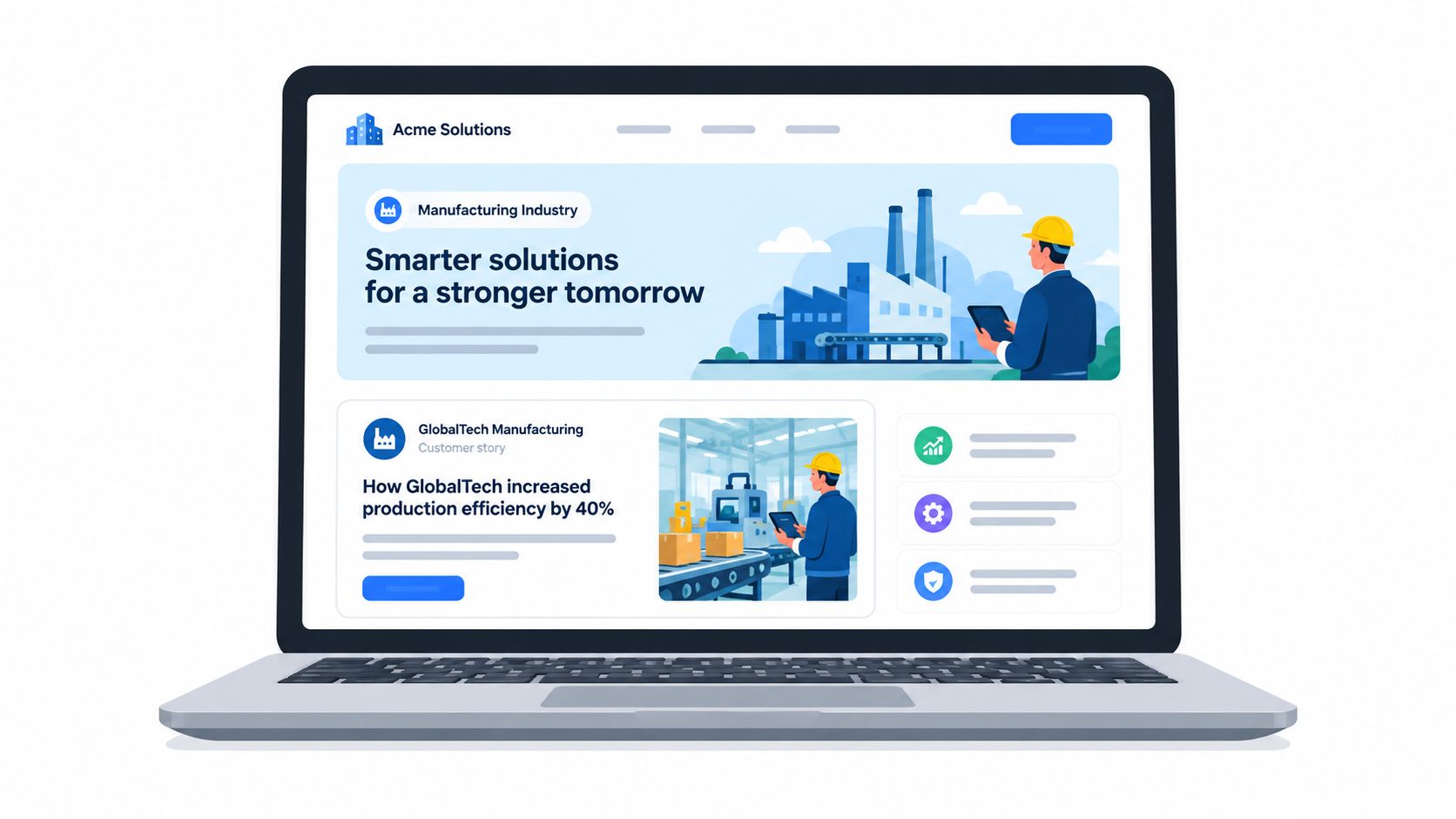
A visitor from a named healthcare account could see a headline about healthcare compliance, a customer story from a similar organization, and a call with the rep covering that segment. A manufacturing visitor might see operational language and a different proof point. For broader inspiration, these 7 website personalization examples for 2025 show how varied on-site adaptation can be.
Personalize the problem before the name
Start with a few industries or account tiers. Industry-level relevance is often enough, and it’s safer than displaying a company name prominently. One documented one-to-few model mapped outreach to buying committees of as many as 12 people per account, a useful reminder in examples of B2B account-based marketing programs that one visitor rarely represents the whole decision. Personalization should help multiple stakeholders recognize their own concerns.
Pair the page with a human path. Captiwate’s live video and AI chat can answer questions in context, qualify the visitor, or book the account owner. Test personalized experiences against a control and track meeting bookings, opportunity creation, and account progression. If identification is unreliable, don’t pretend otherwise. Confidently showing the wrong industry message damages trust faster than showing a strong generic page.
8. LinkedIn Account-Targeted Ads for ABM
LinkedIn gives ABM teams a practical way to reach a buying group before they know every contact. Marketers upload target companies through Matched Audiences, then layer job function, seniority, and title filters. The result isn’t true one-to-one marketing, but it can put relevant messages in front of the people most likely to influence a deal.
A team targeting financial services accounts might run separate creative for compliance leaders, finance executives, and technical evaluators. Visitors who reach pricing can be retargeted with a stronger demo invitation. These 8 LinkedIn B2B marketing examples are useful for seeing how account targeting fits into wider B2B campaigns.
J.P. Morgan Payments offers a disciplined version. Its healthcare pilot covered accounts including CVS, McKesson, and Cencora, pairing LinkedIn paid media with account-level targeting and job-function engagement analysis. The pilot produced a 0.54% LinkedIn click-through rate, **54% above Merkle’s cited 0.35% B2B benchmark**, and generated three qualified leads at target accounts, more than previous healthcare campaigns produced collectively.
Coordinate the click with the owner
Build separate ad sets by tier, industry, and buying stage. Exclude customers and open opportunities when the message would be awkward or irrelevant. Alert the account owner when a target company clicks through and shows deeper site behavior. Captiwate’s visitor identification can connect that ad-driven visit to live conversation or scheduling. Report account engagement, qualified conversations, and pipeline separately. A handful of enterprise opportunities can matter more than a large pile of inexpensive clicks.
8 Account-Based Marketing Examples Comparison Guide
| ABM Example | 🔄 Complexity & Resources | 📊 Expected Outcomes | ⭐ Key Advantages | 💡 Ideal Use Case |
|---|---|---|---|---|
| Tiered ABM Program (One-to-One, One-to-Few, One-to-Many) | Medium; requires account scoring, tier rules, and coordinated sales and marketing resources | Scales personalization across priority levels; focuses effort on high-value accounts | Balances deep customization with broad reach | Teams managing target accounts with different deal values and levels of fit |
| Conversational ABM and ABX with Drift | Medium; needs chat technology and prompt human coverage or reliable automation | Faster visitor-to-conversation flow; more meetings booked during site visits | Engages high-intent visitors in real time without requiring form fills | Websites with valuable target-account traffic, especially on pricing or product pages |
| Intent-Triggered ABM Campaigns | Medium–high; requires intent data, behavioral tracking, and coordinated campaign workflows | Better-timed outreach to accounts showing research activity | Helps prioritize active buyers and coordinate sales and marketing | Teams with access to reliable intent data and the ability to act quickly |
| Executive Dinner and Roundtable ABM Events | High; requires event planning, senior attendees, and substantial per-attendee spend | Builds stakeholder relationships and surfaces account priorities | Creates trust and enables peer-level discussion | Tier 1 enterprise accounts with high potential deal value |
| Personalized Video Outreach for Target Accounts | Low–medium; requires rep time, recording tools, and tailored research | Increases outreach visibility and can prompt replies or meetings | Adds a human, specific touch to sales outreach | Reps engaging named prospects or small account clusters |
| Multi-Channel Direct Mail and Gifting ABM | Medium–high; requires package costs, fulfillment, compliance checks, and coordinated follow-up | Can renew attention and create a reason for sales follow-up | Memorable physical touch complements digital outreach | High-priority accounts with a relevant engagement trigger or stalled conversation |
| Website Personalization for Named Accounts | Medium–high; requires visitor identification, segmented content, and testing | Makes site experiences more relevant and may increase meeting bookings | Delivers tailored proof points across website visits | Teams with identifiable target-account traffic and content for key segments |
| LinkedIn Account-Targeted Ads for ABM | Medium; requires audience setup, ad spend, and coordination with sales | Builds awareness and nurture among buying groups at target companies | Reaches multiple stakeholders without requiring contact lists | Teams seeking paid reach across defined account lists and job roles |
Turn the Examples Into an ABM Operating System
The pattern across these examples isn’t personalization for its own sake. It’s coordination. Marketing selects the account, sales understands the buying group, both teams agree on the signal that matters, and the next step arrives while the account is still engaged.
Start with the ICP and tier the list carefully. Tier 1 deserves custom insight and executive access. Tier 2 works through shared industry problems. Tier 3 needs scalable relevance and fast routing. If the account value can’t support the effort, don’t force a one-to-one program onto it.
Then choose one primary buying signal for the motion. It might be a pricing-page visit, research surge, event attendance, video view, repeat visits from several employees, or engagement with an account-targeted ad. Define who receives the alert, how quickly they respond, and what happens if nobody responds.
Personalization opens the door. Timing, ownership, and a credible next step get the account through it.
Measurement is where many programs still wobble. Benchmark coverage reports that 55% of respondents struggle to connect anonymous account engagement to known stakeholders, 38% have difficulty mapping leads to accounts, and only 34% have separate ABM measurement and attribution today, according to reporting on ABM measurement challenges. That makes marketing-sourced pipeline a narrow and often misleading test. Nearly 60% of ABM organizations use both sourced and influenced attribution, while 22% rely only on influenced attribution.
Use a progression chain instead. Track engaged target accounts, buying-group coverage, qualified conversations, meetings, opportunities, influenced pipeline, and revenue. Compare those accounts with a matched group that didn’t receive the program. That won’t make attribution perfect, but it’ll tell you whether accounts are moving, which is the question ABM is supposed to answer.
Before launching your next campaign, run this checklist.
- Account fit: Is the account in the right tier, with a clear owner?
- Buying group: Which roles matter, and which ones can you reach?
- Signal: What behavior will trigger action, and what’s noise?
- Relevance: What account or segment need does the experience address?
- Next step: Can the visitor talk, book, or reply without friction?
- Follow-up: Who acts, how fast, and where is it logged?
- Measurement: What account progression would prove this worked?
Captiwate fits this operating system where website behavior needs to become sales action. Its visitor identification, intent detection, traffic segmenting, live video, AI qualification, scheduling, and CRM synchronization can help teams recognize target-account activity and route it to the right owner. That doesn’t replace account selection, strong creative, or sales judgment. It closes the gap between anonymous research and a coordinated conversation.
Pick one motion, one segment, and one signal for your first test. Run it tightly enough to learn something. Then expand only when the account progression justifies the extra personalization.
Turn high-intent target-account visits into live sales conversations with Captiwate, which identifies visiting companies, detects buying behavior, and connects prospects through in-browser video, AI chat, or one-click scheduling. Sync conversations, meetings, and account signals to your CRM so marketing and sales can act on the same evidence. Visit Captiwate to see how your next ABM motion can move from anonymous engagement to a booked conversation.