The strongest account based marketing examples share one mechanic, engaging a target account at the moment intent is detected instead of waiting for a form fill, which is how Snowflake turned targeted follow-up into 34 sales-qualified opportunities and five immediate customers. The eight examples below cover tiered ABM, conversational ABM, intent-triggered personalization, account-based paid advertising, personalized video, direct mail and gifting, executive events, and intent-data orchestration, and each one follows the same tactical format of trigger, play, KPIs, leak point, and replicable next step.
That’s a deliberate break from popular advice. Most famous ABM stories are told as brand showcases. You get the clever creative, the big logo, and a pipeline number with no baseline. You don’t get the routing rule, the response window, or the exact moment the account went cold. Copying the creative without the mechanics is why so many programs produce engaged accounts and no meetings.
Every program that works converges on speed. An account researches, visits a pricing page, watches a video, or attends an event. That signal has a short life. If your team waits for a form, a weekly report, or a rep to notice a CRM task, you’re marketing to memory. The plays below treat the website visit, ad click, video view, and event registration as triggers for an immediate conversation, whether that’s a live in-browser call, a click-to-meet prompt, or AI chat qualification when no rep is available.
Table of Contents
- 1. Tiered ABM (One-to-One, One-to-Few, One-to-Many)
- 2. Conversational ABM on Target Account Websites
- 3. Intent-Triggered Website Personalization for Target Accounts
- 4. Account-Based Paid Advertising on LinkedIn and Programmatic Channels
- 5. Personalized Video Outreach to Target Accounts
- 6. Account-Based Direct Mail and Gifting Campaigns
- 7. Executive ABM Roundtables and Account-Based Events
- 8. Intent-Data-Driven ABM Orchestration
- 8 Account-Based Marketing Examples: Strategy Comparison Matrix
- Turning These 8 ABM Examples into Your Next 90 Days
1. Tiered ABM (One-to-One, One-to-Few, One-to-Many)
Tiering is the operating model underneath almost every other example here. Tier 1, one-to-one accounts get fully custom campaigns. Tier 2, one-to-few accounts share clustered campaigns built around a common industry or problem. Tier 3, one-to-many accounts get scaled programs with light personalization. Terminus popularized this model, and ITSMA research helped shape early ABM practice.
The image below captures the basic logic. One structure, very different levels of effort underneath it.
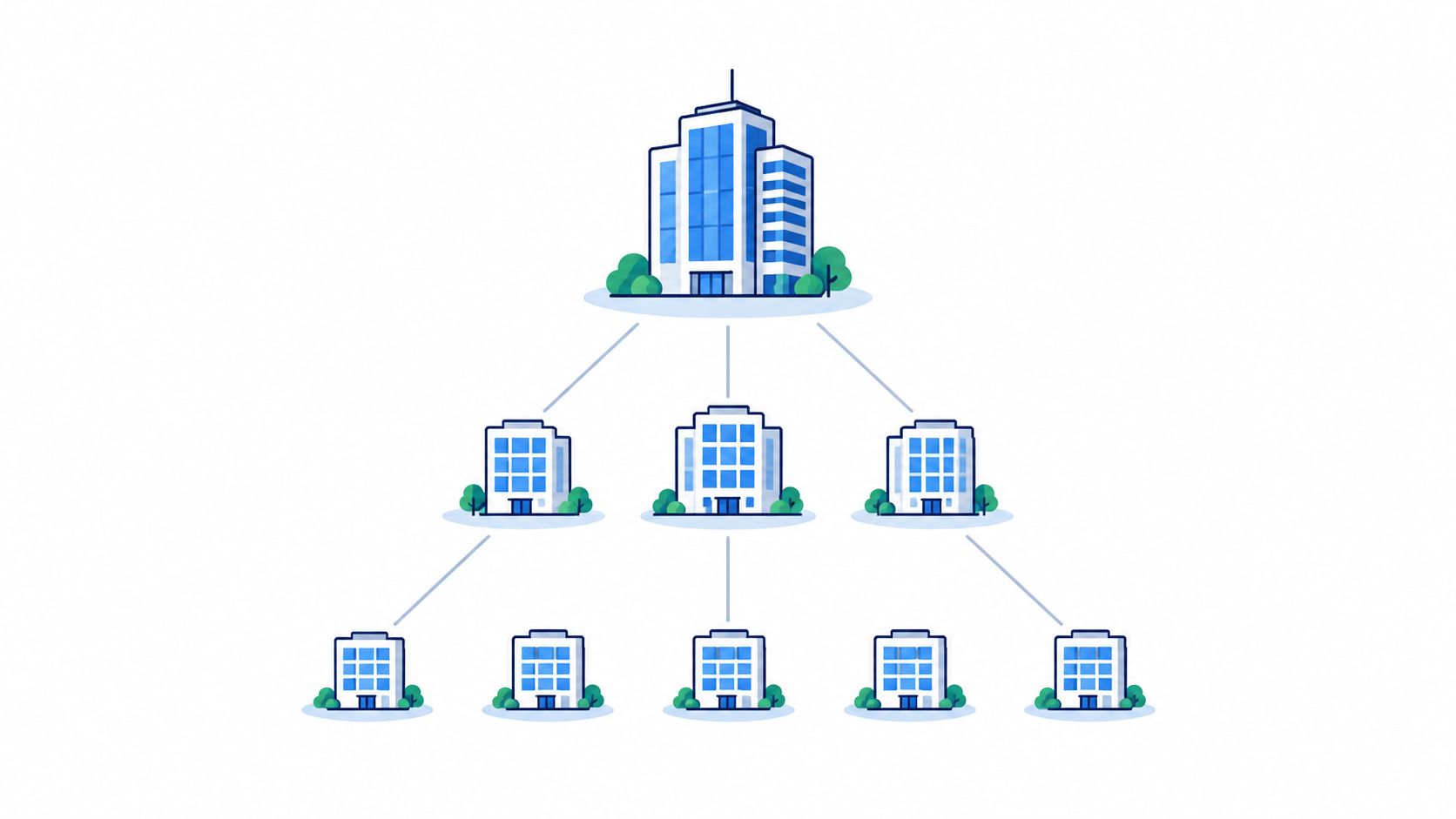
Scale doesn’t break the model if your tiers are honest. BioCatch targeted 553 of the world’s largest banks and, over six months, BioCatch delivered a fivefold increase in active-pipeline accounts, a 63% increase in actively engaged accounts, 125 campaigns, and 6% of the target list entering pipeline. That works because hundreds of accounts can share orchestration while only the highest-value accounts get bespoke treatment.
The replicable play
Build tiers from fit plus intent, not fit alone. Industry, company size, and tech stack tell you who could buy. Page views, return visits, and research surges tell you who’s moving now. Cap Tier 1 at a list your reps can work, then map each tier to a response. Tier 1 gets a live video offer and named owner alert. Tier 2 gets co-browsing and AI chat with fast human backup. Tier 3 gets automated routing and meeting booking.
Most teams leak when they build tiers in a spreadsheet and never connect them to the website. An account gets promoted on paper while its visitors still see a generic contact form. If you’re building your first list, start with practical examples of account based marketing and then review tier assignments monthly. Promote accounts when engagement rises. Demote them when signals go quiet.
KPIs to track: account stage progression by tier, meetings per tier, pipeline created per tier, and time from first high-intent visit to first conversation.
2. Conversational ABM on Target Account Websites
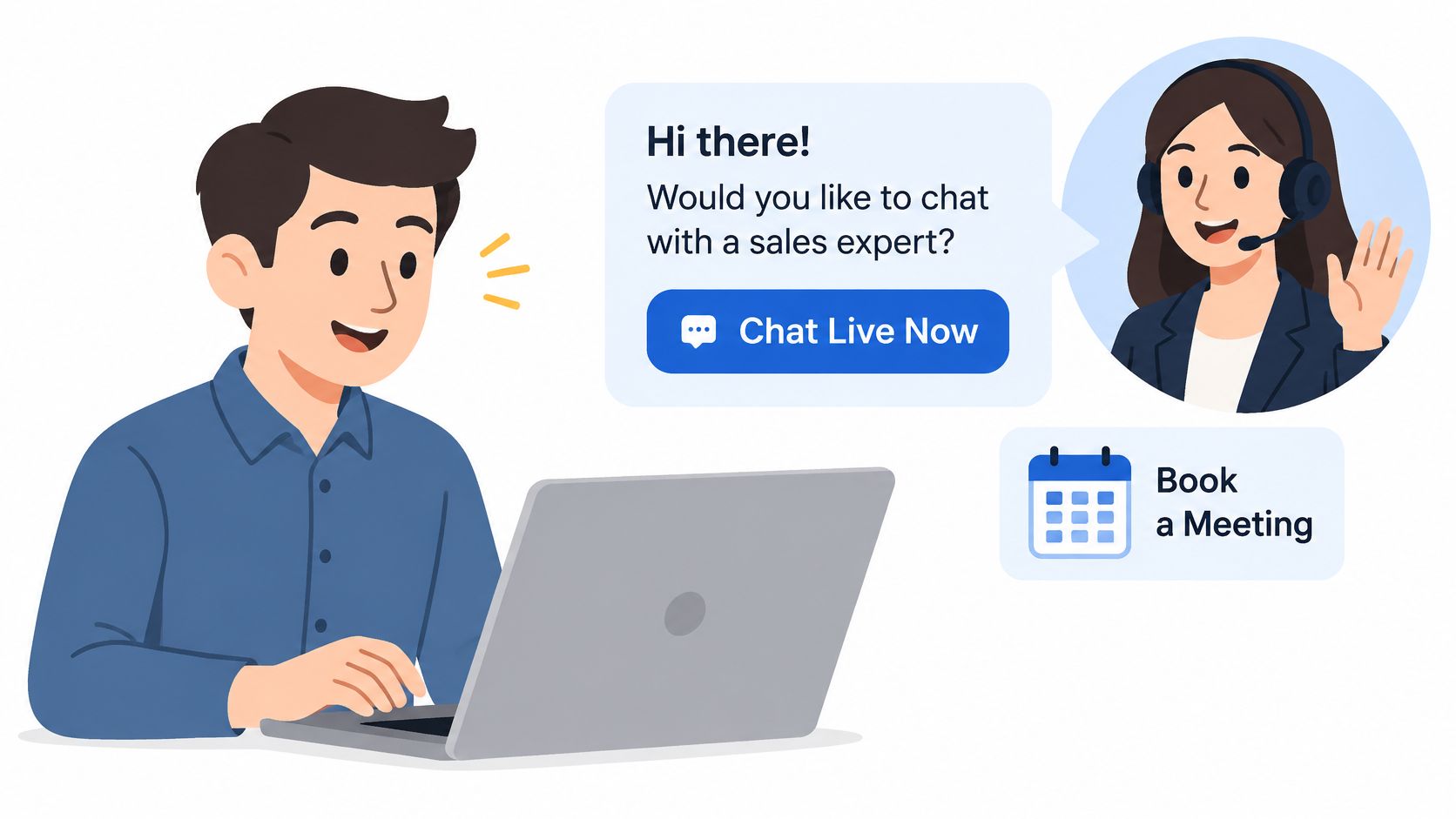
Conversational ABM starts with a simple trigger. Someone from a named account lands on your pricing, demo, or integration page. Instead of showing them the same chat widget you show everyone, you route them to the account owner, greet them with relevant context, and offer a live conversation or an immediate meeting.
Drift built its playbook around this idea, pairing account identification with chat routing to named reps. Many B2B SaaS teams now run a version of it, including identified-visitor alerts in Slack so the owner sees the visit while it’s still happening, not in tomorrow’s report.
This short illustration shows the shift. The website stops being a brochure and starts acting like a sales floor.
Where accounts go cold
They go cold in the gap between the visit and the follow-up email. A target account checks pricing twice, reads a security page, and leaves. Your SDR emails two days later with no reference to what happened. The buyer has already talked to a competitor who responded in the moment.
The account didn’t reject your product. It rejected your response time.
Trigger engagement only on high-intent pages. A blog visit doesn’t need a sales rep. A second pricing visit in one week does. Personalize with company or industry context, but don’t sound like you’re surveilling an individual. Keep the language helpful and optional, because some buyers want a human and some want to keep researching alone.
Route to the account owner first, with a named backup if they’re unavailable and AI chat covering off-hours. Then measure what matters. Track time to first response and meetings booked per target-account visit, not raw chat volume. High chat volume from the wrong accounts is a vanity metric.
3. Intent-Triggered Website Personalization for Target Accounts
Personalization fails when it’s cosmetic. Swapping a company name into a headline impresses nobody and sometimes unsettles people. What works is changing the proof, the use case, and the next step based on the account’s industry, tier, and behavior.
Demandbase built account-based web personalization around that principle, and Mutiny-style tools let teams swap content for identified accounts without rebuilding pages. A healthcare visitor sees healthcare customer proof. A financial services visitor sees compliance-relevant proof and a security resource. Same page, different evidence.
The performance case rests on orchestration, not on ads or headlines alone. Adobe is cited with a 3x increase in visitor-to-lead conversion rates, while SAP Concur is reported at 4x funnel velocity and progression from 20% to 70% of accounts advancing through a journey stage. Read those figures as a measurement lesson. Stage advancement at the account level is the KPI, alongside visitor-to-lead conversion.
A template you can copy
- Pricing page, Tier 1 account: Show industry proof and offer an immediate live video or click-to-meet prompt routed to the owner.
- Product page, Tier 2 account: Show the relevant integration or use case and open AI chat qualification with human handoff.
- Resource page, any target account: Keep the self-service content friction-free and log the visit as an engagement signal, not a sales emergency.
Start with a small set of rules tied to your top industries or tiers. Use customer logos and proof points rather than the visitor’s company name. Make sure every personalized experience still ends in a clear next step, whether that’s a live call, a booked meeting, or a relevant resource. Then report conversion by tier and page intent, with the account as the unit of analysis. Page-level click rates will hide whether the right companies are moving.
4. Account-Based Paid Advertising on LinkedIn and Programmatic Channels
Paid ABM is air cover, not a pipeline strategy by itself. You upload target company and contact lists to LinkedIn Matched Audiences or run programmatic campaigns through platforms such as Demandbase, so only people at named accounts see the ads. Done well, the buying group has already seen relevant proof before a rep reaches out.
The SAP Concur case shows why baseline discipline matters. The company advertised to prioritized accounts consistently for three to four months and compared results with the same accounts before advertising. SAP Concur recorded a 60% increase in website visits from targeted accounts, engagement rising from 51% to 95%, closed-won revenue up 52%, average deal size up 57%, and pipeline up 59%. The pre and post cohort design is what makes those numbers credible enough to act on.
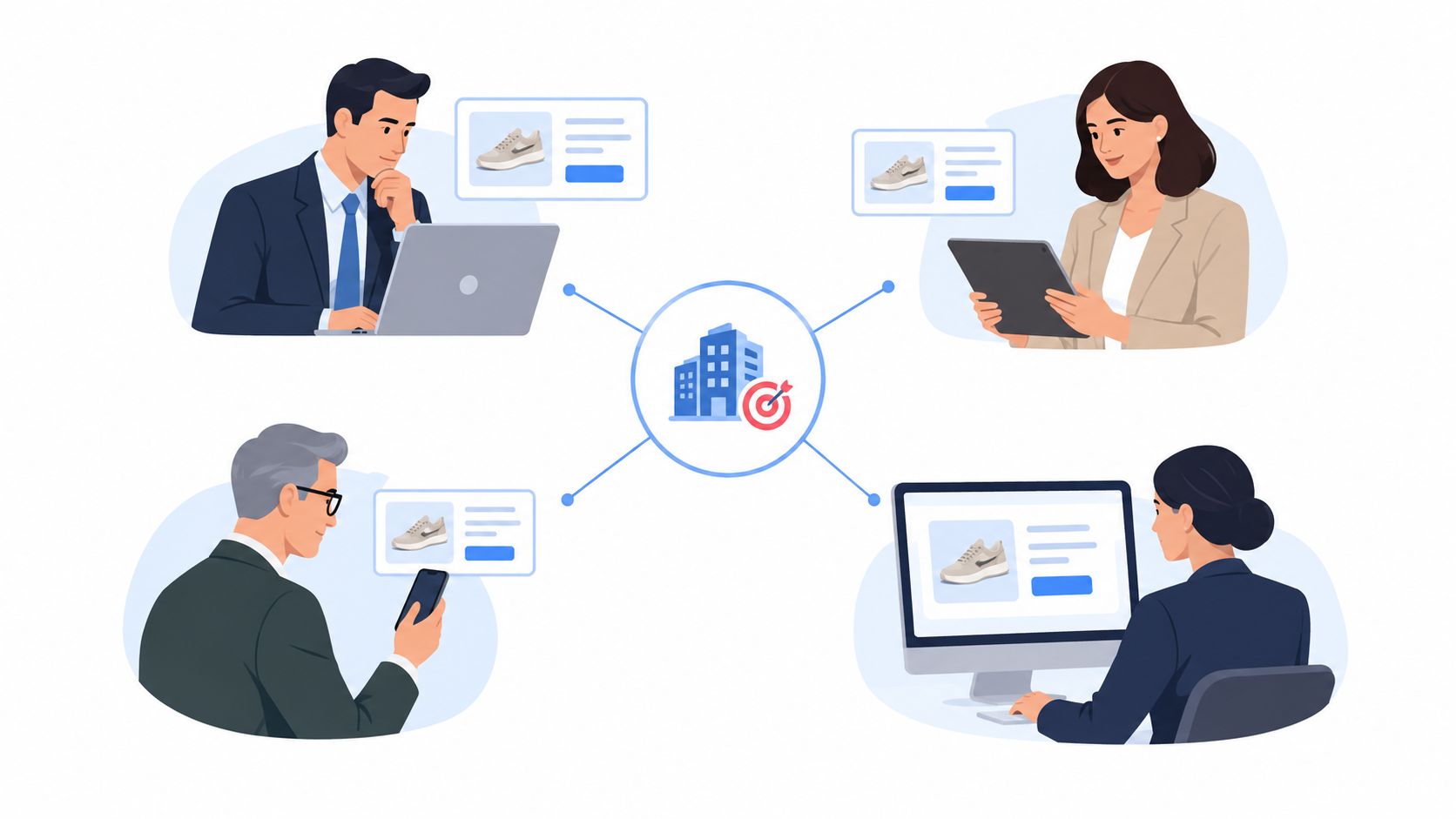
This visual shows the multi-device reality you’re buying into. Different stakeholders see your message in different places.
The leak point nobody budgets for
Ads create a visit. The visit hits a generic landing page with a form. The account leaves. Marketing reports strong engagement and sales never sees a conversation. That gap is where your ad spend dies.
Close it by pairing every campaign with an on-site trigger. When a targeted account lands on a pricing or product page, offer immediate video or AI chat qualification. Record first and repeat visits by account. Measure time from high-intent visit to conversation and to booked meeting. Keep Tier 1 lists tight enough that your budget creates real frequency, run creative variations by funnel stage and role, and judge the program on account engagement and pipeline influence. Click-through rate alone will reward curiosity, not buying intent.
5. Personalized Video Outreach to Target Accounts
A short, specific video beats a polished generic one. The rep names the account’s problem, references something real about the company, walks through one relevant screen or idea, and ends with one next step. Vidyard has long promoted this approach for sales outreach, and SDR teams use Loom-style recordings for Tier 1 walkthroughs every day.
The photo below shows the unglamorous reality. A person, a camera, and a clear point of view.

Keep the video short and open with the account’s specific problem, not your company history. Build a reusable template per industry, then customize the opening for each account. That balance matters. Fully custom videos don’t scale past a handful of accounts, and fully templated videos get deleted on sight.
Turn a view into a conversation
The view is the intent signal. Treat it that way. When a stakeholder watches, alert the owner and follow up quickly with a meeting request or a live conversation offer while the content is still fresh. Send the video to several stakeholders in the same account, because a single champion rarely carries an enterprise deal through technical validation, security review, and finance approval alone.
This walkthrough shows how a concise, account-specific recording is structured in practice, with the personal opening doing the heavy lifting before the reusable middle section begins.
Track views by account, not by individual contact. Your KPIs are accounts with at least one engaged viewer, accounts with multiple viewers, replies per account, and meetings booked after a view. If one person watches three times and nobody else in the account engages, that’s curiosity, not momentum.
6. Account-Based Direct Mail and Gifting Campaigns
Direct mail works because it’s hard to ignore a physical package. It fails because many teams treat the send as the campaign. A box arrives, someone opens it, and then nothing happens because there’s no immediate digital next step attached to the moment.
Sendoso is the best-known platform for coordinating these sends, and the strongest triggers are specific. A stalled deal. A missed demo. A new executive hire. A proposal that went quiet. Sales teams also use handwritten notes after proposals to thank a Tier 1 buying group and reopen the conversation on human terms.
Practical rule: Reserve physical outreach for Tier 1 accounts or late-stage deals where the deal value justifies the cost and effort per account.
Building the send around the follow-up
Start with the follow-up, then design the package. Every send needs a booking link or QR code that takes the recipient straight to a meeting page, a live video option, or a short personalized resource. Pair it with a digital touch soon after delivery, such as a call or video invitation from the account owner. If you’re choosing what to send, a thoughtful personalized corporate gift strategy beats an expensive generic item that signals budget rather than relevance.
Check the target company’s gift policy before sending anything of value. Some enterprises require employees to decline gifts, and an awkward compliance moment is the opposite of the impression you want. When in doubt, send something useful and modest, such as a relevant book, a printed benchmark, or a handwritten note with a specific observation about their business.
Measure delivery to meeting conversion by account. Track replies, bookings through the included link, and opportunities reopened. A send that produces compliments but no conversations is a branding expense. Call it that, or fix the follow-up.
7. Executive ABM Roundtables and Account-Based Events
Events are the oldest ABM play in this list and still one of the most effective for Tier 1 accounts. A small, invitation-only dinner, roundtable, or private webinar gives senior leaders peer conversation they can’t get from a webinar with hundreds of attendees. Deal size justifies the cost per account.
Snowflake shows what disciplined follow-up does to event economics. Snowflake generated 2,320 event sign-ups, with 39% of attendees from net-new accounts, and converted customers worth more than $100,000 in lifetime value each despite a normal enterprise sales cycle of roughly 9 to 12 months. The lesson isn’t the event format. It’s that registrations from target accounts were treated as sales signals, not top-of-funnel leads to nurture for a quarter.
Run the event like an account play
Invite two or three people per account so the conversation continues internally after the event ends. Use a non-sales theme, such as a peer benchmark discussion, and protect that promise during the session. For in-person formats, details matter, from the room layout to materials like custom exhibition stands at larger hosted gatherings. Production quality signals how seriously you take the relationship.
The leak point is predictable. The event ends on Thursday, marketing sends a generic thank-you email on Monday, and sales follows up the week after. By then the peer conversation is forgotten. Schedule live follow-up calls within two days, reference something specific that was discussed, and offer a direct meeting rather than a content download.
This is also where marketing and sales alignment stops being a slogan. Account based selling gives reps the framework for multithreaded follow-up after the event creates the opening. Track attendees who book meetings, accounts that move into pipeline, and accounts where a second stakeholder engages after the first event.
8. Intent-Data-Driven ABM Orchestration
Intent data tells you an account is researching your category before it visits your site. Platforms such as 6sense and Bombora aggregate that research behavior and flag surges by topic. Used alone, the signal is noisy. Combined with first-party behavior, it becomes a prioritization engine.
There’s a boundary teams ignore at their cost. Gartner found 61% of surveyed B2B buyers preferred an overall rep-free buying experience, while buying groups are reported at roughly 5 to 16 people, with an average near 11. So an intent surge doesn’t mean one decision maker wants a cold call. It means a group is researching, and some of them want self-service resources while others may want help at the right moment.
Orchestrate by signal strength
- Early research surge, no site visit: Start account-based ads and relevant content. Don’t send SDRs in yet.
- Surge plus first-party visit: Alert the owner, personalize the web experience, and prepare outreach with context.
- High-intent page visit from a surging account: Offer an immediate live conversation or AI chat qualification. This is the moment the whole system exists for.
Set thresholds by tier so Tier 1 accounts trigger faster alerts than Tier 3 accounts. Respect consent, retention, and suppression rules, and be careful with individual-level inferences, especially in regions with stricter privacy enforcement. Permissioned, role-aware assistance converts better than surveillance-flavored personalization, and it protects trust with the accounts you most want to win.
Review intent-to-pipeline conversion monthly. If surging accounts aren’t producing conversations, your thresholds are wrong, your topics are wrong, or your response play is too slow. The KPI chain is surging accounts, surging accounts that visit, visits that become conversations, and conversations that become opportunities.
8 Account-Based Marketing Examples: Strategy Comparison Matrix
| ABM Example | 🔄 Implementation Complexity | ⚡ Resource Requirements | 📊 Expected Outcome | ⭐ Key Advantage | 💡 Ideal Use Case |
|---|---|---|---|---|---|
| Tiered ABM (One-to-One, One-to-Few, One-to-Many) | Moderate; needs scoring and regular tier reviews | Varies by tier; highest for Tier 1 | Effort aligned with account value and potential | Scales personalization across account lists | Structuring an ABM program across different account priorities |
| Conversational ABM on Target Account Websites | Moderate; requires visitor identification, routing, and coverage | Chat or video tools, sales coverage, CRM integration | Faster engagement and more meetings from high-intent visits | Connects website activity directly to sales conversations | Engaging identified target accounts on pricing or demo pages |
| Intent-Triggered Website Personalization | Moderate to high; depends on data, content, and testing | Personalization platform, reliable account data, content library | More relevant visits and improved account-level conversion | Personalizes at scale without building a page for every account | Tailoring website experiences for priority industries, roles, or tiers |
| Account-Based Paid Advertising | Moderate; requires audience setup, creative, and measurement | Ad budget, account lists, multiple creative variations | Greater target-account reach and pre-outreach awareness | Reaches buying groups beyond website visitors | Warming named accounts and supporting coordinated sales outreach |
| Personalized Video Outreach | Low to moderate; custom production increases effort | Rep time, video tools, scripts, and follow-up workflows | More personal outreach and engagement signals | Humanizes communication with specific stakeholders | Starting or expanding conversations with Tier 1 accounts |
| Account-Based Direct Mail and Gifting | Moderate; requires coordination, fulfillment, and policy checks | Higher per-account spend, contact data, delivery operations | Memorable engagement and potential reactivation | Stands out amid digital outreach | Re-engaging stalled deals or reaching senior stakeholders |
| Executive ABM Roundtables and Events | High; involves planning, curation, and follow-up | Event budget, senior speakers, attendee coordination | Trust, stakeholder access, and qualitative buyer insight | Creates peer interaction and multithreaded relationships | Engaging high-value accounts where deal potential warrants investment |
| Intent-Data-Driven ABM Orchestration | High; requires data integration and signal thresholds | Intent platform, analytics, CRM integration, sales alignment | Earlier prioritization and better-timed outreach | Surfaces potential buyers before they visit the website | Prioritizing accounts showing category research or buying signals |
Turning These 8 ABM Examples into Your Next 90 Days
Every example above reduces to two capabilities. Identify the right account. Engage it fast at the moment of highest intent. Tiering decides where effort goes. Ads, video, events, and gifting create moments. Personalization and intent data detect them. Conversational engagement converts them. Remove any one of those links and the program still looks busy while pipeline stalls.
Measurement is where you should be more demanding than most listicles suggest. Target accounts are selected because they fit and often because they’re already researching, which creates selection bias. A rising win rate may mean better accounts, not better marketing. A smaller matched-control or holdout design teaches you more than a large campaign with impressive engagement numbers. Traditional lead-generation metrics are insufficient for ABM measurement, so compare exposed and control accounts on pipeline creation, sales-cycle length, win rate, deal size, and revenue over a defined account-level window.
A practical 90-day sequence
Days 1 to 30, pick two tiers. Build a Tier 1 list your reps can work and a broader Tier 2 cluster. Score accounts on fit plus intent. Agree on ownership, routing, and backup rules before you spend anything on campaigns.
Days 31 to 60, define and instrument your triggers. Decide which signals matter, such as pricing visits, repeat visits, video views, event registrations, and intent surges confirmed by first-party activity. Put an immediate engagement path on every high-intent page, whether that’s in-browser video, click-to-meet, or AI chat for off-hours coverage. A platform like Captiwate can handle that layer, identifying visiting companies, routing Tier 1 visitors to their owner, and syncing conversations and meetings to your CRM.
Days 61 to 90, run two plays and measure carefully. Pair account-based ads with on-site conversational triggers for one tier, and run an executive event or personalized video play for the other. Hold out a comparable control group where you can. If you want more campaign structures to test against your own, compare your plans with other documented ABM examples for B2B teams and keep only what survives contact with your data.
Track meetings booked per target account, account stage progression, opportunity creation, and pipeline velocity by tier. Don’t report raw traffic to leadership as an ABM result. They’ll ask the right question eventually, and you’d rather answer it first.
Account based marketing examples are only useful when they become a play your team runs. Pick the two plays that match your tiers, wire the trigger to an immediate conversation, and measure the account, not the click. That’s the whole discipline. Everything else is decoration.
Captiwate identifies target accounts on your website, detects buying intent from their behavior, and connects Tier 1 visitors to the right rep through in-browser video or AI chat, with meetings and intent synced to your CRM. If your ABM program creates engaged accounts but too few live conversations, see how Captiwate closes that gap on your highest-intent pages.